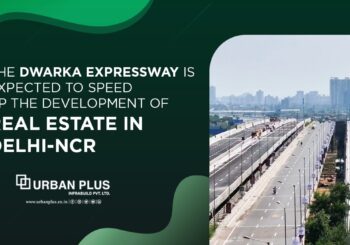
The Dwarka Expressway is expected to speed up the development of real estate in Delhi-NCR

As a property investor, you’re constantly on the lookout for areas with high potential for appreciation and substantial profits. The Dwarka Expressway in Gurugram is one location worth keeping an eye on. according to reports supplied by the National Highways Authority of India authorized personnel. Officials have stated that the Dwarka Expressway’s Delhi segment is scheduled to open in February 2024. It is anticipated that the project will be completed by August 2024. This 18-kilometer-long 8-lane road is expected to transform connectivity throughout the National Capital Region. Once operational, it will shorten travel time between Gurugram and Delhi, freeing up vast amounts of land for real estate development. Several reputable builders have already started residential buildings along the freeway, with more expected in the following years.If you’re searching for a long-term investment that may outperform the market, the Dwarka Expressway is worth considering.

Overview of the Dwarka Expressway Project.

The Dwarka Expressway is a planned eight-lane access-controlled roadway in India’s National Capital Region (NCR). It would connect Gurugram and Dwarka in Delhi across an 18-kilometer distance. For individuals wishing to invest in real estate, the Dwarka Expressway has appealing options due to various features.

The highway will improve connectivity in the NCR, shortening travel times and alleviating traffic congestion. The highway is positioned near residential and business areas, including DLF phases 1-5, making it handy for residents. The highway will connect the Delhi-Gurgaon highway at Kherki Daula with the projected Magenta Line extension of the Delhi Metro.

Key Advantages of Investing Along the Dwarka Expressway

The Dwarka Expressway is expected to be a game changer for real estate in Delhi NCR. Investing in property near this road has numerous significant advantages.

Strategic Location and Connectivity.

The Dwarka Expressway connects Gurugram and West Delhi, joining key business areas such as Cyber City, Udyog Vihar, and Manesar. This improves access to commercial and IT hubs, as well as the Indira Gandhi International Airport. The journey time between Gurugram and West Delhi has been cut to around 15-20 minutes. The expressway’s strategic location and seamless connection make it a desirable destination for both businesses and investors.

High appreciation potential.

Residential and commercial property values along the Dwarka Expressway have steadily increased over the years due to scarcity of land, good infrastructure, and connectivity. According to industry analysts, house prices are likely to rise by 10-15% annually in the future years. This has the potential for significant returns on investment.

Modern amenities.

Real estate buildings along the Dwarka Expressway provide a luxurious lifestyle complete with contemporary amenities including as clubhouses, swimming pools, gyms, sports facilities, manicured gardens, and 24-hour security. These premium facilities, along with excellent connections, attract both purchasers and renters, maintaining consistent demand and occupancy rates.

Major infrastructure developments are happening in parallel.

The Dwarka Expressway is set to alter real estate in the NCR. This 18-kilometer-long, 150-meter-wide, access-controlled highway would enable signal-free connectivity between Dwarka in Delhi and Gurugram in Haryana.

Residential and Commercial projects

A significant transition is now taking place on the Dwarka Expressway, as seen by the growing number of residential and commercial constructions. Prominent developers such as Elan, M3M, Smartworld, DLF, Whiteland, and several more have emerged as crucial players in this changing environment.Their involvement demonstrates how important this corridor is becoming as a top real estate destination. The experience of these well-known developers ensures a variety of possibilities, from innovative residential complexes to state-of-the-art business spaces. Building activity has increased as a result of the Dwarka Expressway’s attraction as well as a favorable shift in the area’s urban development, which is anticipated to offer a variety of residential and commercial alternatives to both residents and business owners.

Social Infrastructure

To accommodate the rising population, the Dwarka Expressway region will have multiple schools, hospitals, and other social infrastructure. The projected Medanta Hospital and Shiv Nadar University would provide high-quality medical and educational services. Sectors 112 and 113 will also have several schools, healthcare facilities, and parks.

Connectivity and Convenience

The Dwarka Expressway offers quick access to vital places like IGI Airport (15-20 minutes), Dwarka (10-15 minutes), and Gurugram (20-25 minutes). Several modes of public transportation will be accessible along the highway, including metro rail and bus service. The region also has a self-sustaining ecology with stores, restaurants, and entertainment choices in close vicinity.

Overall, the Dwarka Expressway has strong infrastructure and connections, making it an excellent site for investment. The region has properties for all budgets as well as great expansion potential, with major infrastructural improvements occurring concurrently. The freeway is poised to transform the NCR’s real estate market.

Forecasts for Price Growth and Investment Returns

The Dwarka Expressway has the potential to transform the NCR real estate market. This 18-kilometer-long, eight-lane road would connect Gurugram with Delhi, going through relatively underdeveloped areas bordering Gurugram.

Increased accessibility.

The highway will make the neighboring areas considerably more accessible, reducing the travel time between Delhi and Gurugram. This increased connection will make the area a desirable location for residential and commercial development. The areas surrounding the highway will undergo major infrastructure and social development in the next few years to support the new communities.

Price Appreciation Potential

Because of limited availability and rising demand, properties along the Dwarka Expressway are now seeing considerable price increase. Property values are expected to rise significantly as the area’s infrastructure and connections improve. Investors that invest early will profit from huge financial gains over the following 3-5 years.

Various Housing Options

The Dwarka Expressway area will provide housing alternatives at a variety of pricing points to accommodate all budgets. Along the road, you’ll find everything from cheap apartments to luxurious villas. Real estate developers are also expected to show great interest in the region, with plans to construct a number of new residential projects in the coming years to accommodate the rising population.

Commercial opportunities

In addition to residential buildings, the Dwarka Expressway region has the potential to become a significant commercial real estate hub. As new towns emerge around the highway, there will be a greater need for retail, office, and mixed-use space. Investing in commercial property along the corridor may result in significant rental revenue and financial profits.

Conclusion

Overall, the completion of the Dwarka Expressway would change the real estate landscape of Delhi NCR. As an investor, you now have the opportunity to capitalize on this boom by investing in homes along the highway corridor before prices climb dramatically. Dwarka Expressway is positioned to become the next real estate hotspot, thanks to its world-class infrastructure, accessibility to Gurugram and Delhi, proximity to Indira Gandhi International Airport, and surrounding significant real estate developments. Those wishing to invest in Delhi NCR should move quickly. The future seems promising for this region, and the Dwarka Expressway will usher in a new age of growth, development, and wealth in the national capital region. The game changer has arrived!

Connect with us at Urban Plus for the best deals in Real estate Gurugram.

Delhi-NCR’s real estate market: Here’s why wealthy Indians are buying luxury houses.


Few launches in the luxury housing segment and the fear of missing out on the most desirable properties is making these units fly off the shelf in Delhi-NCR

Recently, two listed real estate developers in Delhi-NCR launched luxury properties ranging from ₹7 crore to ₹12 crore, which realtors reported were quickly sold out. Demand for luxury and ultra-luxury residences among rich Indians has increased, according to real estate experts, owing mostly to a lack of launches in the luxury housing market and a fear of missing out (FOMO) on the best properties in town.

There is less supply to meet rising demand for luxury residences, particularly in places like Gurgaon and Delhi. Rich investors in Delhi, who used to buy bungalows, are now seeking housing complexes with contemporary facilities, particularly dedicated parking, which is a huge difficulty, according to real estate specialists.

DLF sold over 1000 premium home units at Privana South in Gurugram for ₹7200 crore in just three days of pre-launch. The enclave will have 1,113 premium homes spread across seven storeys. These would be four-bedroom flats with penthouses. ‘DLF Privana South’ will be part of a bigger development, DLF Privana, which spans roughly 116 acres in Sectors 76 and 77.

TARC Ltd, a listed real estate business, proposes to invest over ₹1200 crore in a premium housing complex with over 400 apartments in Central Delhi. TARC Kailasa is a 1.7 million square foot complex sprawled over 6 acres of land on Patel Road in Kirti Nagar. Andy Fisher Workshop, a Singapore-based architectural studio, will design the five high-rise structures, each with 35 stories. Arabian Construction Company is the building contractor.

TARC MD and CEO Amar Sarin stated that luxury housing is here to stay as customers, particularly those who live in bungalows, seek to upgrade to apartments with modern amenities that meet all of their needs, particularly in terms of security and parking.

Luxury initiatives gain traction.

“This is a continuation of the pattern that began in March of last year. Overall, demand in luxury residences is high, particularly among experienced real estate developers. This trend is likely to continue till 2024. “We can expect more launches in the luxury category as developers continue to buy land,” said Mudassir Zaidi, Executive Director – North at Knight Frank India.

According to Ashim Chowdhury, Vice President – Research at ANAROCK Group, the DLF Project, which was successfully launched in Sector 76/77 Gurgaon on the Southern Peripheral Road (SPR), demonstrates the micro market’s future potential.

The proximity to the National Highway, as well as the additional access to the Dwarka Expressway and the Mumbai Expressway, make it a sought-after position in the city. A premium product of this size, with over 1,000 units, is expected to pave the way for many more luxury releases in the near future, as well as create a new price standard. Prices in Gurgaon are already rising as the focus switches from inexpensive and mid-range to high-end and luxury developments in burgeoning micro markets, he added.

According to ANAROCK Research, 4,76,530 units were sold in the top 7 cities in 2023. Luxury house sales priced over ₹1.5 crore accounted for 25% of the total, with around 1,19,130 units sold. In terms of market share, luxury sales increased by 7% between 2023 and 2022. If we look at the data by unit, the number of luxury units sold in 2023 has increased by 81% year on year, from around 65,677 in 2022 to over 1,19,130 in 2023. This reflects the increasing demand for luxury properties in the top seven cities.

NRIs are increasingly investing in luxury houses.

DLF’s recent Privana South project in Gurugram sold over 1000 luxury home units for ₹7200 crore within three days of pre-launch, indicating strong demand for such properties

“Buyers continue to invest in trustworthy developers with a proven track record. According to Amit Goyal, managing director of India Sotheby’s International Realty, the demand for luxury residences is strong since capital markets are performing well, individuals have more cash at their disposal, and they want to move to nicer houses.

The fact that a large amount of demand for this product originated from NRIs illustrates that the sector continues to look to India for their retirement requirements. 

The rise in demand is primarily due to lifestyle upgrades.

The wealthy prefer ultra-luxury residences for a variety of reasons. These apartments are more than simply a status symbol; they represent a lifestyle shared with others. “The demand for these homes is driven by a desire for superior amenities, a healthy lifestyle, spacious living areas, distinctive designs, and a prestigious address,” stated Ramesh Ranganathan, CEO of K Raheja Corp houses.

“Ultra-luxury developments account for 70-75% of our sales, followed by the mid-premium/luxury market. A major portion of our luxury sales come from Mumbai, where we have projects ranging from 3 crore to 50 crore. These selective clientele choose to invest in a personalized and unique lifestyle when it comes to luxury real estate,” he explained.

Delhi against Mumbai

Buyers in Delhi have always preferred bungalows over apartments, resulting in a horizontal real estate market.

Delhi is facing a pattern that Mumbai experienced decades ago. The restricted availability of premium residential homes contributes to their success. Also, the developer’s track record is driving increasing sales traction. In contrast, Mumbai buyers have several options in the luxury category, which is one of the reasons why it can take a developer six months to a year to exhaust inventory in the segment,” explained Ritesh Mehta, senior director and head (West and North) of residential services and developer initiatives at JLL.

Connect with Urban Plus for the best deals in Gurugram real estate

Source : Hindustan Times

Unlocking opportunities : The booming Real Estate Market in Gurugram.

Gurugram is becoming a popular place for people to buy houses because it’s well-connected to other important cities in the NCR region. The demand for houses here is so high that property prices are going up by 4-5 percent every three months.

In the last ten years, Gurugram’s real estate has been growing a lot, thanks to better connections through metros, highways, and expressways. Places like Dwarka Expressway, SPR Road, cyber hubs, MG Road, DLF Phase 3 & 4, sectors 37-D, 71, 76, 77, and Sector 84 have seen a lot of development.

The Delhi-Mumbai Expressway and the Global City project by the Haryana government are making Gurugram a hotspot for properties. People want homes in areas like New Gurugram because of this.

Gurugram’s real estate market is seeing more demand for mid-income and luxury homes. Places like New Gurugram, sectors 37-D, Sector 71, Sector 84, Dwarka Expressway, and the Southern Peripheral Road are getting more popular, with property values increasing a lot. Projects like the metro expansion, the upcoming Global City, and RRTS are helping Gurugram’s real estate.

Dwarka Expressway is becoming a top choice for both living and investing. It’s a 27 km long, 8-lane expressway that connects Dwarka in Delhi to Manesar in Haryana. It’s expected to be free from traffic jams, making travel faster. Its connection to the international airport and being close to business and IT hubs make it even more appealing.

The Haryana government is thinking of raising the rates for certain areas, like Golf Course Road, MG Road, and along the Dwarka Expressway. There are also proposals to increase rates for agricultural and commercial land in Badshapur and residential and commercial land rates in Wazirabad tehsil.

With a lot of demand, good infrastructure, and government interest, Gurugram looks like a great place for real estate. Southern Peripheral Road and Dwarka Expressway are seen as good places to invest because of easy connectivity and development, offering good opportunities for investors. 

Connect with us at Urban Plus for the best deals in Gurugram Real Estate.

Decoding Real Estate Investments : Unveiling the Key Factors for Success with Urban Plus

Investing in real estate has long been seen as a profitable and reliable source of wealth generation. Whether you’re a seasoned investor or a newcomer to the real estate market, recognizing the essential aspects that make a property worth investing in is critical. In this article, we’ll look at the factors that contribute to the appeal of real estate as an investment.

The age-old adage Location, Location, Location applies to real estate investments. The location of a property is undoubtedly the most important aspect in determining its value. The proximity to services, schools, transit hubs, and dynamic communities may considerably increase the attractiveness of a home. Keep a look out for places with the potential for future growth or revival, since they may provide significant returns on investment.

Successful real estate investors monitor market movements and economic factors. Understanding the local and national economic climate, interest rates, and employment growth may help anticipate how much a property will appreciate. Furthermore, evaluating historical market data might give useful information on the cyclical nature of real estate markets.

Investing in property for renting purposes, whether residential or commercial, offers a reliable income source. Residential properties provide stable demand, diverse tenant pools, predictable rental rates, and potential for long-term growth. Commercial properties offer higher rental income potential, long-term leases, triple net leases for expense reduction, and portfolio diversification. Consider factors such as rental demand, typical rates, and long-term growth potential to ensure positive cash flow, contributing to the overall profitability of your real estate portfolio

Property Condition and Future Maintenance: The physical condition of a property is vital. While a fixer-upper may appear to be a good deal, the cost of renovations and repairs should be included when calculating the entire investment. Assess the property’s age, structural integrity, and the need for future care to avoid unexpected costs that might reduce your profits.

Regulatory Environment: The legal and regulatory environment has a substantial influence on real estate investments. Stay current on zoning rules, construction codes, and any future regulatory changes in the region. A detailed awareness of these aspects can assist you in navigating potential issues and ensuring compliance with local rules.

Potential for Appreciation: Predicting future property value is tricky, although some signs can indicate potential for appreciation. Consider things like planned infrastructure projects, job growth, and demographic changes. Properties in places with a high potential for appreciation can give significant long-term rewards.

Diversification is a key aspect of financial strategy. Instead of investing all of your resources in a single property, consider diversifying your real estate portfolio. This can assist to reduce risks and create a more balanced and reliable investing strategy.

Conclusion

Investing in real estate demands a smart strategy. By properly evaluating criteria like as location, market trends, rental income possibilities, property condition, regulatory environment, appreciation potential, and diversification, you can make educated selections that correspond with your financial objectives. When treated with attention and a long-term perspective, real estate can be a great vehicle for wealth creation. To guarantee a successful and gratifying real estate investing journey, connect with us at Urban Plus for the best deals in gurugram real estate.

Gurgaon’s Real Estate: Drawing Homebuyers and Investors to a Thriving Market

The City of Dreams , Gurgaon has long been known for its progress, innovation and a thriving urban lifestyle. Located in the heart of India’s National Capital Region (NCR), Gurgaon’s real estate market is on the rise, attracting homebuyers and investors.

In this blog, we take a look at the promising future that lies ahead in Gurgaon’s real estate landscape. 

The impressive growth in Gurgaon’s real estate sector can be connected to several factors. Its strategic location and excellent road and rail connections attract buyers looking for a modern and dynamic living experience. 

Gurgaon’s ever-changing skyline is proof to its dynamic growth. Prominent commercial and residential projects have transformed the urban landscape and provided a variety of housing options, from luxury apartments to integrated townships. Gurgaon’s real estate market truly caters to the diverse needs and tastes of its residents. 

Balancing between nature and city life Gurgaon is more than just towering buildings. It offers a harmonious combination of nature and city life. With many parks, green spaces and recreational areas, you can enjoy luxury and a balanced lifestyle amidst the hustle and bustle of the city. This unique feature sets Gurgaon apart and provides a refreshing environment for its residents.  

The future of real estate in Gurgaon is shining. Future projects will increasingly focus on sustainable development and intelligent technology.

Commercial Center : Gurgaon is more than just a residential paradise. It is also a thriving commercial center. The city is home to famous IT parks, business centers, and co-working spaces, making it an ideal destination for multinational companies and startups. The commercial real estate sector is rapidly growing and offers entrepreneurs and professionals exciting opportunities for success.  

Embracing the Future:  Whether you’re looking for promising investment opportunities or dreaming of a home in Gurgaon, the future is incredibly bright. The city’s commitment to sustainable development, combined with its status as an economic hub, makes it an exciting prospect for those who want to be part of a dynamic and evolving community. So seize the opportunity and be a part of Gurgaon’s journey to reach new heights in the real estate world. 

Connect with us at Urbanplus for best deals in Gurugram Real Estate.

Record-Breaking Growth of Malls as Top Cities  like Delhi-NCR, Mumbai, Bengaluru, and more See Unprecedented Growth

Last year, there was a 72 percent surge in the addition of retail space in shopping malls, reaching 59.48 lakh square feet across eight major cities, driven by the increasing demand from retailers, as reported by Cushman & Wakefield. In 2023, a total of 11 shopping malls were inaugurated, providing 59,48,395 square feet of space in the top eight cities. In contrast, the preceding year saw the opening of nine malls in eight markets, covering a total area of 34,49,222 square feet.

Even though e-commerce has recently been a term in the retail business and companies are focusing on online channels, physical retail continues to thrive in big cities where customers are thought to be more connected and hence more likely to shop online. Following the Covid lockdowns, merchants began closing or shrinking their locations to save money on rent. The trend has reversed, as customers return to malls and marketplaces. 

According to Cushman & Wakefield, the new supply of retail space in shopping malls climbed 72 percent last year to 59.48 lakh square feet across eight major cities, meeting surging retailer demand. In 2023, up to 11 shopping malls will open, covering 59,48,395 square feet among the top eight cities. In the preceding year, nine malls entered eight markets, totaling 34,49,222 square feet. Hyderabad saw the completion of three retail malls, while Pune and Chennai got two apiece.

One retail mall each was built in the Mumbai metropolitan region, Delhi-NCR, Bengaluru, and Ahmedabad. No new supplies were seen in Kolkata. 

A Retail Real Estate Boom

According to a JLL India research ‘India Retail: Evolving to a New Dawn’ released last year, new supply of retail real estate space is likely to increase by 43% across seven key cities by 2027 as developers grow their businesses amid a robust comeback following the pandemic.

India’s retail sector is experiencing rapid growth, with a focus on creating an innovative built environment, strengthening consumer connections, and curating physical storefronts in underserved regions of the country, including tier II and III cities,” said Rahul Arora, Head of Office Leasing Advisory and Retail Services, India, JLL.

Following enormous residential growth, the retail sector is currently experiencing strong tailwinds. The major aspects driving this trend include a positive global perception, strong growth potential, rapid economic improvement, and optimistic investment sentiments,” Gaurs Group CMD Manoj Gaur stated in response to the report. Vinod Rajpaul, CEO of Gurugram-based real estate firm Ocus Group, stated that organized retail is on the rise. Malls have seen a significant boost in footfall, particularly

Out of the total retail stocks in malls of 89 million square feet as of June-end last year, Delhi NCR had the most at 28 million square feet, followed by Mumbai with 17 million square feet and Bengaluru with 14 million.

JLL claimed that the physical retail space market is likely to have a supply pipeline of more than 38 million sq ft of retail developments across the top seven cities between H2 2023 and 2027.. Out of the 38 million square feet of new retail supply in malls planned by 2027, Delhi-NCR will have 11.6 million square feet, accounting for 31% of the total supply.

Impact of Malls

Malls are anticipated to draw more than Rs 20,000 crore in investment over the next 3-4 years as the country’s largest mall developers, DLF, Prestige, and Phoenix, enter the next phase of expansion, while practically all prominent retailers increase their store count, industry officials told ET.

Private equity investments are driving much of the increase in retail space. Almost 60% of malls that opened in 2023 had private equity investment.

Most malls that opened in 2023 had strong pre-commitments and were promptly occupied upon opening. They include Palladium in Ahmedabad, Pacific Premium in Delhi NCR, Lulu Manjeera in Hyderabad, Mall of Millennium in Pune, and Mall of Asia in Bengaluru, all of which have occupancy rates exceeding 90%. According to ICRA, overall grade A retail mall supply in the top six markets is likely to expand to 116-118 million square feet by March 2025, up from 105 million square feet today.

According to Icra, mall owners’ rental income is predicted to rise by 9-10% year on year in FY24 and 8-9% in FY25, owing to strong occupancy levels, expected growth in trading values, and rental escalations. Jewelry, electronics, apparels, beauty care goods of premium brands, and entertainment had above-average consumption growth in the recent quarters, which is projected to continue in the near to medium term due to strong consumer demand, according to ICRA.

More and larger stores

Listed retail firms such as Reliance Retail, PVR, Aditya Birla Fashion, and Tata Trent boosted their store count dramatically last year as sales increased.

Retailers across categories are opening larger brick-and-mortar stores and expanding existing ones as consumers demand a better physical retail experience. According to real estate services business Anarock, the share of stores smaller than 2,000 square feet fell to 52% in the first half of 2023-24, down from 61% the previous year.

During this time, the proportion of stores sized 2,000-5,000 sq ft climbed from 19% to 21%, as did those sized 5,000-10,000 sq ft (11% from 9%) and 10,000-15,000 sq ft (13% from 9%).

Retailers across categories are using a two-pronged approach, expanding and entering newer markets while also boosting store sizes to leverage on the growing proportion of the organised retail industry. “The store now focuses on experience rather than merchandising. Anarock Retail’s COO and joint MD, Pankaj Renjhen, recently told ET that by extending the store, they are broadening their portfolio. 

Fashion and apparel, as well as home and department stores, accounted for more than half of all leasing activity. During this time, Bengaluru, Delhi-National Capital Region, and Pune had a combined share of more than 61%. The supply of new retail space increased by 577% year on year in the first nine months of 2023, reaching around 2.98 million square feet.

Outlet Malls

At least half a dozen factory outlet malls are planned in India, like in the United States and the United Kingdom, as retail facility developers try to compete with online rivals in a market increasingly driven by significant discounts, ET reported last year. While such retail locations, where brands are given at discounts throughout the year, are popular worldwide, the market remains unorganized in India.

We have created one such mall in Delhi’s Jasola, which has all of the luxury brands’ factory outlets. Some brands have established their first such store in the country. It is still in its early stages, but the concept is likely to acquire traction,” Abhishek Bansal, managing director of Pacific Malls, told ET last year. The mall offers discounted rates on brands like The Collective, The Tank, Tommy Hilfiger, Calvin Klein, Lacoste, Skechers, Adidas, and Birkenstock. The company hopes to expand.

Factory outlets for premium brands were not receiving adequate development in India, which has since changed with the introduction of premium outlet malls. According to Rajesh Jain, managing director and CEO of Lacoste India, these malls would offer the ideal setting, including food and beverages as well as movies, making shopping a comprehensive experience. “Until today, most factory outlets were located on busy streets, making it difficult for customers to find parking. “Our store at the Jasola mall has exceeded our expectations,” he stated.

Retail will expand beyond malls and high streets, moving to highways as additional infrastructure is created. On highways, a factory outlet mall with food and beverage options and recreational areas makes sense. Susil S. Dungarwal, founder of Beyond Squarefeet, a retail mall specialized company, told ET that this will become a popular concept in the next years

Connect with Urbanplus for the best deals in Gurugram Real Estate.

Source : Economic Times

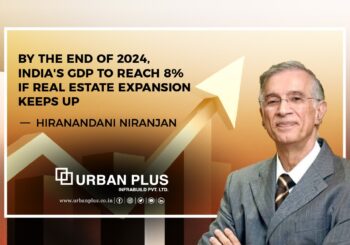
By the end of 2024, India’s GDP might reach 8% if real estate expansion keeps up: Hiranandani Niranjan

JLL India analysis indicates that the Indian real estate market is expected to rise at a rate of 10 to 15 percent over the next several years.

Budget 2024: The real estate industry will undergo a radical shift in the upcoming year. Furthermore, we believe that the government will need to consider affordable housing in the future budget for 2024. We anticipate lower interest rates on home loans or even incentives,” Hiranandani Group’s Niranjan Hiranandani stated.

The Indian real estate sector saw record-breaking sales in 2023. The Managing Director (MD) of the Hiranandani Group, Niranjan Hiranandani, projects that India’s GDP would reach 8% in 2024 if the country’s real estate sector keeps expanding.

According to Hiranandani, India’s real estate market would expand more quickly than other industries. Real estate has a multiplier effect on the rest of the economy, which raises GDP. In addition, Hiranandani stated that despite the global slowdown, India’s IT, banking, and BFSI sectors are all performing well. The luxury and mid-class residential real estate markets have both prospered, and Mumbai is seeing significant infrastructural development.

With Prime Minister Narendra Modi’s launching of the MTHL link between Mumbai and Navi Mumbai in the next 24 months, a major shift in the real estate market is anticipated. There will be a 300-kilometer Metro network in the MMR as well. In addition, Hiranandani stated that the 2024 budget should prioritize affordable housing and that lower interest rates or potential incentives for house loans should be anticipated.

Third-year real estate upcycling:

The third year of the real estate upcycle has begun, with strong post-COVID-19 demand. More of what we produce and release is being ingested. Located in Mumbai, South India, we are constantly growing. Speaking to CNBC-TV18, Irfan Razack, Managing Director of Prestige Group, stated, “For us, we have got great response in Mumbai.

Affordable housing is a current necessity, thus infrastructure development will aid further. The source of volumes will be middle-class homes. Although it is a niche market, luxury will do well; actual quantities will come from mid-income housing, said Razack.

Prospects for growth in 2024:

JLL India analysis indicates that the Indian real estate market is expected to rise at a rate of 10 to 15 percent over the next several years. The residential segment had a 26 percent gain in sales in 2023 over the previous year, which was rather impressive. The high reached in 2023 was even more remarkable than the one in 2010, according to Samantak Das, Chief Economist and Head of Research at JLL, who noted that this was an unparalleled high since 2010.

Tech hubs like Bengaluru have seen very strong results, selling more flats than the Mumbai real estate market. Experts in the field predict that interest rates on home loans will drop in 2024, which would likely spur additional expansion in the real estate market.

Connect with Urbanplus for the best deals in gurgaon Real Estate

Source : Moneycontrol

Sales of homes increased 13% in Gurugram in 2023 but decreased 7-8% in Noida and Greater Noida.

Residential property sales in Gurugram increased 13% to 36,970 units in 2023, up from 32,615 units the previous year.

NEW DELHI: Housing sales in Gurugram increased by 13% year on year in 2023 due to high demand, particularly for luxury flats, while sales in Noida and Greater Noida fell by 7-8%. Sales of residential properties in Gurugram increased by 13% year on year to 36,970 units in 2023, up from 32,615 units the previous year.

However, sales in Noida declined 8% to 5,840 units, down from 6,360 units. Greater Noida had a 7% dip in sales, falling to 10,180 units from 10,985 units. Ghaziabad, too, had an 8% decrease to 6,340 units from 6,890 units.

The overall number of housing sales in Faridabad, Delhi, and Bhiwadi fell to 6,295 units in 2023, down from 6,860 units the previous year.

Overall, the Delhi-NCR had a 3% increase in house sales to 65,625 units in 2023, up from 63,710 units the previous year.

In other parts of the National Capital Region (NCR), sales have decreased due to a decrease in the number of new home projects being launched. Realty firms Signature Global, TARC Ltd, and Elan Group attributed the increase in sales in Gurugram to the positive consumer sentiment and the progress of several infrastructure projects.

The Gurgaon real estate market is experiencing a surge in demand for mid-income and luxury homes, driven by young professionals and nuclear families looking for an aspirational and convenient lifestyle

Hotspot zones such as New Gurugram, Dwarka Expressway, and the Southern Peripheral Road are attracting a large number of buyers, generating double-digit capital value increases.

The real estate landscape in Delhi NCR, particularly Gurugram, is experiencing a renaissance, defying market challenges and demonstrating robust demand.

Gurugram was the most popular destination in the NCR, supported by expanding infrastructure. The city’s Dwarka Expressway was the most promising micro-market for the residential sector.

Source : Economic Times

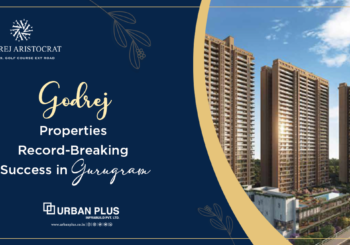
Godrej Properties’ Record-Breaking Success in Gurugram

In a recent exchange filing, Mumbai-based real estate developer Godrej Properties announced its monumental success with the launch of Godrej Aristocrat in Gurugram, Sector 49. This development has proven to be the company’s most triumphant launch to date, surpassing its previous best, set when it sold homes worth over 2,000 crore rupees at its Noida project, Godrej Tropical Isle, in the previous quarter.

Unprecedented Sales and Milestones

Godrej Aristocrat, located near Golf Course Extension Road, has witnessed extraordinary success, with inventory sales exceeding Rs. 2,600 crore. The project has achieved remarkable milestones by selling over 600 units, making it a standout accomplishment for Godrej Properties. The CEO, Gaurav Pandey, emphasized the significance of Gurugram as a key market for the company, expressing their commitment to creating exceptional residential communities that deliver long-term value to residents.

Future Endeavors in Gurugram

Godrej Properties has ambitious plans for Gurugram in the coming years. Gaurav Pandey revealed that the company aims to commence four additional projects in Gurugram in 2024, highlighting their dedication to further contributing to the real estate landscape in the region.

Let’s find out more about the Godrej Properties with Urban plus

Godrej Aristocrat: A Luxurious Oasis

Godrej Aristocrat, situated in Sector 49, is described as an ultra-luxurious development, continuing Godrej Properties’ legacy of excellence. The project promises an expansive world of opulence, sophistication, and tranquility. With breathtaking views and meticulous craftsmanship, it aims to be a testament to grand living where every moment is a celebration.

Key Features of Godrej Aristocrat

● Location Excellence: Nestled close to Golf Course Extension Road, Sector 49 offers a seamless blend of luxurious infrastructure, lush surroundings, and well-planned facilities.

● Connectivity: The location ensures speedy connectivity to essential hubs, including HUDA City Gurugram Centre Metro Railway Station and IGI Airport. It is also surrounded by renowned schools, hospitals, and malls.

● Manicured Forest: Residents can indulge in the serenity of a manicured forest, providing a bespoke escape into nature’s embrace.

● Grand Arrival Experience: The development promises a grand arrival experience, where sophistication and grandeur intertwine to set the stage for an exceptional way of life.

● Forest-Themed Landscaping: Godrej Aristocrat features lush greenery and tranquility with forest-themed landscaping, offering a serene ambiance reminiscent of the woods.

● Grand Clubhouse Amidst the Forest: The Grand Clubhouse is nestled within a carefully curated forest, providing a retreat of unmatchable grace and serenity.

● Spacious and Luxurious Homes: Meticulously designed homes feature top-tier ceiling heights, generously wide balconies, and an overall sense of grandeur that complements a luxurious lifestyle.

● Extraordinary Lifestyle: Godrej Aristocrat invites residents to embrace a life of opulence, elegance, and grandeur—a world where luxury is not just a choice but a defining essence of living.

With Godrej Aristocrat, Godrej Properties aims to redefine luxury living in Gurugram, setting new standards in residential development and delivering a lifestyle that is truly extraordinary.

Source : The Hindu Business line

India’s Mall story grows even more intriguing, expected to see investment of around Rs 20k cr in 3-4 years

The largest mall developers in the nation, DLF, Prestige, and Phoenix, have begun the next stage of their expansion, and over the next three to four years, malls are anticipated to draw in investment totaling more than ‘20,000 crores, as nearly all of the leading retailers are increasing the number of stores they own.

New Delhi: The need for retail real estate is booming. Industry officials stated that more than 5 million square feet (msf) of grade A malls opened for business in 2023, marking the largest number in seven years and that an additional roughly 8 msf is planned for completion in 2024.

Malls are likely to draw more than Rs 20,000 crore in investment over the next 3-4 years as the country’s largest mall developers, DLF, Prestige, and Phoenix, start the next phase of expansion as practically all top retailers boost their store count.

The retail real estate sector has gained traction, owing largely to the Indian economy’s strong consumption-led growth,” said Saurabh Shatdal, managing director, capital markets, and head retail, India, at Cushman & Wakefield. 

Listed retail firms such as Reliance Retail, PVR, Aditya Birla Fashion, and Tata Trent boosted their store count dramatically this calendar year as sales grew.

Landlords of quality retail assets in good financial condition have a great opportunity to capitalize on this bullish undertone by expanding into several untapped markets, either on the outskirts of tier-I or in tier-II and tier-III cities,” Shatdal added.

Almost all retailers have announced future shop opening plans, including expansion into tier-2 markets.

Physical shopping has increased since the lockout was lifted, and despite a slight dip in recent months, mall managers are optimistic about demand,” said Shriram PM Monga, co-founder of retail consultancy firm SRED. “A lot of new supply is coming in smaller cities as retailers are also expanding to these cities,” he went on to say.

Private equity investments are driving the retail sector expansion. Private equity was involved in about 60% of malls that opened in 2023.

Most malls that opened in 2023 had healthy pre-commitments and were rapidly full. They include the Palladium in Ahmedabad, the Pacific Premium in Delhi NCR, the Lulu Manjeera in Hyderabad, the Mall of Millennium in Pune, and the Mall of Asia in Bengaluru, all of which have occupancy rates of more than 90%. According to Icra, total grade A retail mall supply for the top six markets is likely to expand to 116-118 msf by March 2025, up from 105 msf presently. 

Ambience Mall’s unparalleled achievement is verification of its devotion to giving a first-rate diversion and shopping experience, rehashing retail greatness in every single square foot. Planning to change the shopping climate with development and complexity, Elan Group’s upcoming project, a best-in-class Mall in New Gurugram, is supposed to enhance the city’s way of life. Anticipation is growing for this destination.

.As indicated by the report, Delhi-NCR has the best stockpile commitment of 30%, trailed by Bengaluru at 20%, Mumbai Metropolitan Locale (MMR) at 17%, Pune at 14%, Hyderabad at 13%, and Chennai at 6%.

Icra predicts that good occupancy levels, anticipated growth in trading values, and rental escalation will support mall owners’ rental income growth of 9-10% year-over-year in FY24 and 8-9% year-over-year in FY25. It noticed that fragments, for example, gems, hardware, style, premium brand magnificence care merchandise, and amusement have displayed better than expected utilization development in ongoing quarters, which is projected to go on in the close to medium term because of solid buyer interest.

As per Anarock Retail, the Indian retail industry is anticipated to reach $2 trillion by 2032, up from $690 billion of every 2021, permitting the coordinated retail area to create at a 25% accumulated yearly rate.

Source : Economic Times

Exit mobile version